BioPykrete: New Ice Material Is 10 Times Stronger Than Natural Ice
Hebrew University researchers created a biodegradable composite that rivals concrete in compressive strength, offering a durable option for polar and space construction.
By Ariana Flores ·
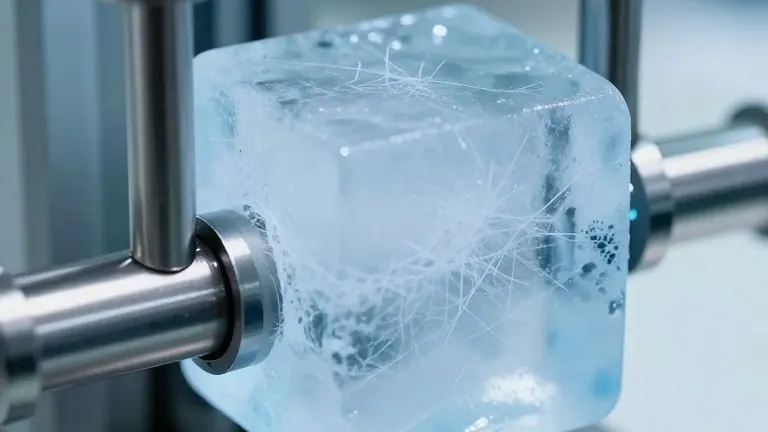
Researchers at the Hebrew University of Jerusalem have developed a molecularly bonded ice material that is ten times stronger than standard ice. Published on November 12, the study details BioPykrete, a composite made from water, plant cellulose, and a specifically engineered protein. The material is also reported to be seventy times harder to break than ordinary ice.
The primary goal is to replace concrete in extreme cold environments like the Arctic and Antarctica. Prof. Ido Braslavsky, the lead researcher at the university's Robert H. Smith Faculty of Agriculture, Food and Environment, noted that concrete production generates high carbon emissions and is expensive to transport to polar regions. BioPykrete serves as a biodegradable alternative that can melt away when a structure is no longer needed, leaving no rubble behind.
Standard ice is weak because its rigid molecular structure causes it to shatter like glass under pressure. BioPykrete solves this by incorporating cellulose fibers extracted from plant waste. These fibers act similarly to rebar in concrete, reinforcing the material so it can bear heavy loads. In laboratory tests, the compressive strength of the composite approached that of standard concrete, making it suitable for temporary structures such as ice roads and camps.
The design builds on the work of British inventor Geoffrey Pyke and crystallographer Max Perutz during World War II. Their original Pykrete combined ice and wood pulp to create a material that was slower to melt and could deflect gunfire. Braslavsky's team advanced this concept by creating a protein chimera that acts as a molecular glue, locking ice crystals directly onto the cellulose fibers.
This molecular bonding changes how the material fails. Instead of shattering suddenly, the cellulose network and protein connections allow the ice to absorb energy and bend gradually. Braslavsky compared the failure mode to wire-reinforced safety glass. He expressed surprise at the strength of the new material compared to the original Pykrete, noting that the complex system was difficult to predict.
The research team is currently testing whether the material becomes stronger in deeper cold and how it withstands repeated freezing and thawing cycles. Braslavsky has spent over thirty years studying ice and snow, including the behavior of ice-binding proteins. His 2013 discovery that antifreeze proteins lock permanently into ice crystal facets provided the foundation for this new composite.
Richard Cathcart, founder of the consulting firm Geographos and not involved in the study, called BioPykrete a boon for outdoor construction in cold regions. He suggested that cargo ships built with the material could withstand collisions with icebergs, potentially reducing delays in Arctic shipping. Braslavsky also identified Mars as a future application site, where native water ice deposits could be reinforced with the engineered material to build protective shelters.