SpaceX attempts first full rocket recovery at Texas Starbase
A 22-hour test flight will end with mechanical arms catching both the booster and spacecraft in midair.
By Ariana Flores ·
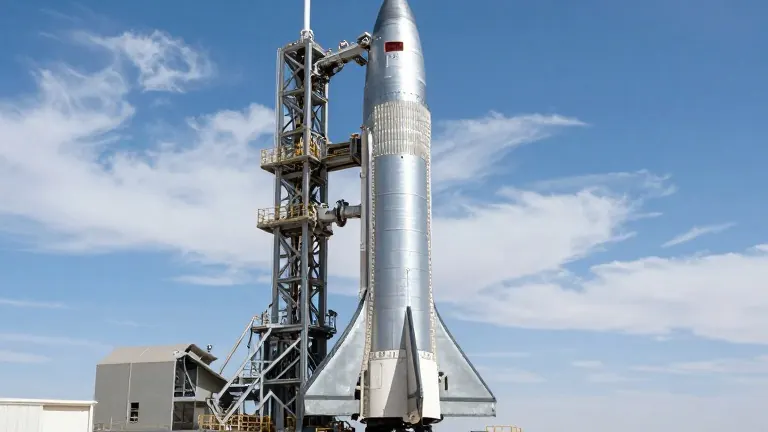
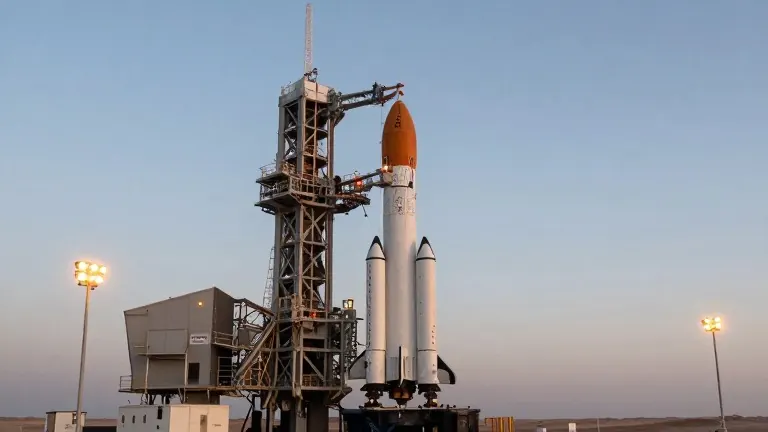
SpaceX will attempt to recover both stages of its Starship rocket on Friday during a test flight designed to prove full reusability. The mission involves launching from the company's facility near the U.S.-Mexico border and returning to the same site two days later. If successful, it will be the first time every component of an orbital rocket is retrieved for recycling.
The rocket reached its current scale through a series of tests over the last three years. In 2023, the first full-scale flight ended in a self-destruct sequence after engine failures. Subsequent flights saw the spacecraft land in the ocean by design or accident. The September 2026 test marked the first time Starship reached orbit, though engineers did not attempt to catch the stages. This new mission targets the production model of the vehicle.
The vehicle stands 407 feet tall when fully stacked. The lower booster section is 236 feet long, and the upper spacecraft is 171 feet long. SpaceX has previously caught three versions of the booster at Starbase. This is the first attempt to capture the upgraded production booster. It is also the first attempt to catch the upper spacecraft. The company has not previously retrieved the top stage, which has ended in the sea on prior flights.
The Federal Aviation Administration granted final approval hours before the scheduled launch. The liftoff is planned for late Friday afternoon. The booster is expected to return to the launch pad six minutes after leaving the ground. Mechanical arms on the tower, often called chopsticks, will secure it in midair. The spacecraft will stay in space for the remainder of the flight.
While in orbit, the spacecraft will deploy 26 Starlink satellites. It will then complete 15 orbits at an altitude of approximately 170 miles. After those laps, the spacecraft will steer back toward the Starbase facility. The recovery is scheduled for Saturday. Engineers will use the same mechanical arms to catch the descending spacecraft.
Kiko Dontchev, SpaceX's vice president of launch, described the event as a major engineering feat. Speaking at a NASA tech summit in Florida last week, he said, “It’s hard to describe how I’m going to feel when we pull this off. It’s so incredibly exciting. It’s such a feat of engineering.” He noted that full reusability is required to achieve high launch rates for future missions.
SpaceX plans to launch Starships from Florida within a few months and from Louisiana in a few years. The company currently uses Falcon rockets for most launches, including NASA crew missions and satellite deployments. Dontchev stated that Falcon rockets are not fully reusable because the second stage is discarded after each flight. Starship aims to change that dynamic by catching both stages.
NASA is using Starship for its Artemis program, which aims to return astronauts to the moon. The agency is paying SpaceX billions for this role. Blue Origin is the other major contractor for lunar landers. NASA will decide which company delivers the crew for the Artemis IV mission, the first crewed lunar landing in over 50 years. That decision is expected to happen one year before the landing. Astronauts will practice docking with both vehicles during the Artemis III mission next summer.
More Tech · San Antonio news · Report a business · Got a Story?