Starship test to circle Earth and land in 22.5 hours
SpaceX is preparing a major orbital test today that could accelerate the retirement of the Falcon 9 rocket, leaving NASA with fewer options for crew transport to the space station.
By James Foster ·
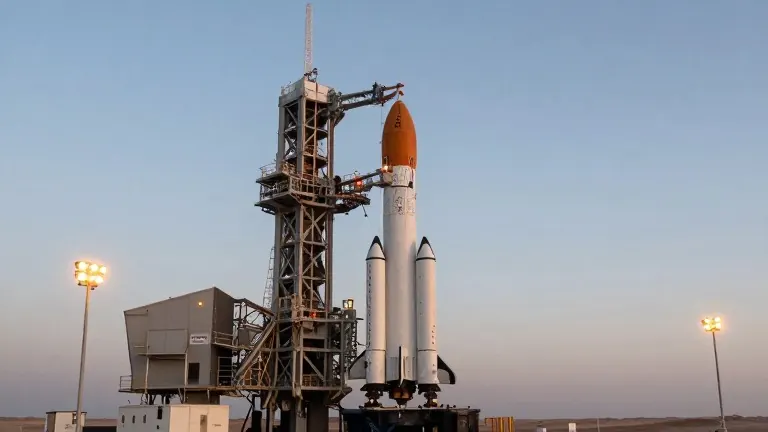
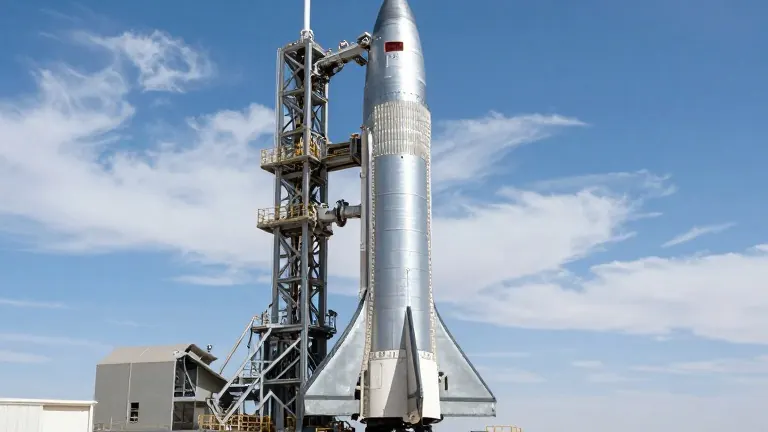
SpaceX plans to launch its Starship rocket from South Texas later today. The vehicle will attempt to orbit the Earth and return to the same launch pad for a vertical landing. The company aims to complete the journey in 22 and a half hours. This test represents the most ambitious attempt yet for the massive rocket.
Elon Musk, the founder of SpaceX, has stated that Starship is intended to carry astronauts to Mars in the future. However, industry experts suggest the rapid development of the new rocket may leave NASA behind. SpaceX has indicated it will stop flying the smaller Falcon 9 rocket as it shifts focus to Starship. The Falcon 9 currently carries the Dragon capsule, which is the only American spacecraft capable of transporting NASA astronauts to and from the International Space Station.
Caleb Henry, director of research at Quilty Space, noted that the Dragon vehicle has become the de facto method for astronauts to reach orbit. He explained that the capsule's reliability has made it the primary option for crew transport. A NASA announcement in September confirmed that the agency has contracted SpaceX for three additional flights to the station. If these missions are flown consecutively in six month increments, Dragon service would end in 2028. The space station is scheduled to retire in 2030.
The current situation marks a reversal of the relationship between the company and the space agency. In 2008, SpaceX was nearly out of money after multiple Falcon 9 failures. Musk told CBS' 60 Minutes in a 2014 interview that the company was running on fumes with virtually no cash. Days before Christmas that year, NASA awarded a large contract to keep the company afloat. Musk recalled that he could not hold the phone and blurted out, 'I love you guys!'
For the next decade, contracts from NASA and the Pentagon provided a large share of SpaceX's revenue. That changed in 2020 with the launch of Starlink, a subscription satellite internet service. Starlink revenue quickly surpassed income from rocket launches. According to SpaceX's latest financial report, the company generated approximately $2.1 billion from space launches through September of this year. Starlink brought in around $12.8 billion, while its growing AI business earned about $10.9 billion.
Starship is central to SpaceX's newer business models. The company already uses the rocket to deploy V3 satellites for Starlink. Musk has expressed interest in using the vehicle to deliver data centers to space. In a post on X earlier this year, Musk said that once Starship flies reliably several times per week, it makes sense to shift engineering and production resources to the new rocket. He added that this shift means winding down the Falcon 9.
Gwynne Shotwell, SpaceX president, compared the Falcon 9 and Dragon capsule to a minivan. She said at the All In summit in Los Angeles in September that the road trip to Mars is six months long, so crews do not want to be in a minivan. However, the minivan is currently the only American option for short trips to the space station. Henry noted that building space capsules is time-consuming and expensive, and NASA is about the only customer willing to pay for them.
The retirement of the Falcon rocket will impact the commercial launch market. A recent analysis by Quilty Space estimates that the market may be short by about 150 launches between now and 2030. The Pentagon has reportedly struggled to find rides for national security satellites. The U.S. Space Force said in a statement to NPR that it has secured Falcon 9 launches through 2028 and is confident other suppliers will fill the gap.
Tim Farrar, president of TMF associates, said SpaceX has grown beyond its launch business. He noted that while individual NASA missions are likely profitable, they are small potatoes for the company. It is not yet clear when SpaceX will retire the Falcon 9. Shotwell implied that Boeing could fly to the station instead. She said Boeing has been paid more than SpaceX to develop its human capsule and that they should fly their vehicle. The Boeing Starliner capsule has faced issues, including a mission that extended from eight days to nine months in 2024. The next Starliner test flight is scheduled for winter, with a crewed flight planned for 2028.