Gulf Tensions: Four Tankers Struck by Mines as Qatar Mediators Return to Iran
Iranian officials report multiple vessels hit in the Strait of Hormuz, while diplomatic efforts resume in Tehran and Houthi rebels target Aden.
By David Marshall ·
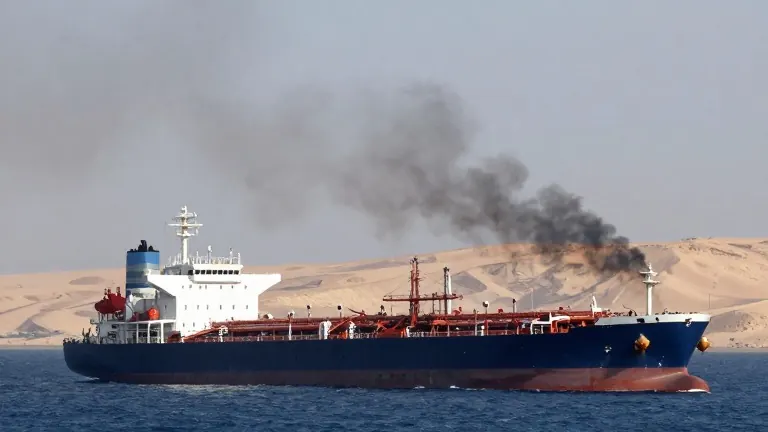
Four oil tankers struck naval mines in the Strait of Hormuz on Friday, according to the Iranian Revolutionary Guard. One of the vessels, a supertanker carrying more than 2 million barrels of crude oil, caught fire after hitting a mine while traveling through an unauthorized route. The Guard identified this as the fourth ship to suffer an explosion that day after attempting to navigate the strait without Tehran's permission.
Iran has repeatedly warned ships not to pass through the strait without approval from its government. Since the United States and Israel launched a war against Iran on February 28, Tehran has claimed control over much of the waterway. The country stated last month that vessels attempting to pass without authorization would be destroyed. The Iranian state television network reported that three other tankers also caught fire after hitting mines earlier in the day. Officials said these ships had turned off their navigation systems and ignored radio warnings, though the report did not identify the vessels or provide details about the crews.
Oman reported that it evacuated 25 crew members from a Panamanian-flagged oil tanker that was attacked near the Musandam governorate coast. The ship caught fire 1.6 nautical miles from shore. It is unclear if this incident is related to the fires described by Iran. The UK Maritime Trade Operations agency also reported that a vessel was hit by an unknown projectile south of Lavan Island, with the crew reported safe.
In Yemen, Houthi rebels launched ballistic missiles at the port city of Aden on Friday. The Yemeni military spokesman, Colonel Majed al-Nazili, said the targets were the international airport and the palace used by the internationally recognized government. Ahmed Hassan, a resident living near the palace, said the explosions were strong enough to break windows. A government official said no casualties were reported, while the Houthis have not yet claimed responsibility for the strikes.
Diplomats from Qatar returned to Tehran on Friday to hold talks with Iranian officials. The Iranian state news agency IRNA reported that the delegation was led by the foreign minister and the prime minister's chief adviser. This diplomatic push follows a recent letter sent by U.S. Vice President JD Vance to Iranian Supreme National Security Council Secretary Major General Mohsen Rezaei. President Donald Trump stated the letter concerned humanitarian aid rather than peace negotiations, though diplomats say U.S. officials have warned regional allies to prepare for a potential resumption of military action after next week's elections.
In the Western Balkans, Greek Prime Minister Kyriakos Mitsotakis criticized a maritime agreement between Libya and Turkey. He called the deal an absurd agreement that violates international law and ignores the rights of Greek islands. The agreement, ratified by the Libyan parliament last week, revives a dispute with Egypt, Greece, and Cyprus over rights in the eastern Mediterranean.
In the West Bank, Israeli forces demolished two homes in Hevron on Friday. The homes belonged to Palestinian gunmen who carried out an attack last week that killed two Israeli soldiers and injured three others. The United Nations Office for the Coordination of Humanitarian Affairs said more than 3,000 people have been displaced by Israeli forces. UN High Commissioner for Human Rights Volker Türk said the operation raised serious concerns about unnecessary and disproportionate use of force, describing the measures as punitive and designed to instill fear.