Afghan poppy fields expand as farmers struggle to feed families
UN data shows cultivation quadrupled this year, reaching 43,300 hectares, after legal crops like cotton and wheat failed to cover basic costs.
By David Marshall ·
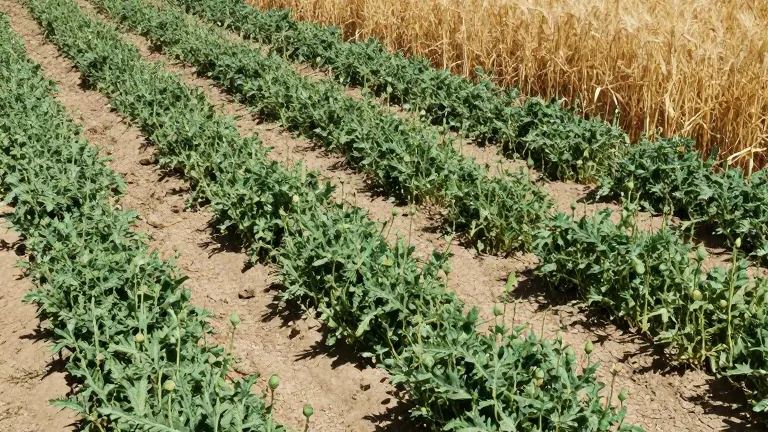
Farmers in northern Afghanistan are returning to opium poppy cultivation as legal crops fail to provide enough income to feed their households. The United Nations Office on Drugs and Crime reported on Thursday that poppy fields across the country more than quadrupled this year. The total area reached an estimated 43,300 hectares, a sharp increase from 2025 levels.
The expansion follows a four-year ban enforced by the Taliban that initially removed poppies from most fields. Polleak Ok Serei, the UNODC country representative for Afghanistan, stated that many farmers have no other choice but to plant poppy because legal alternatives no longer pay. He noted that neither the Taliban government nor the international community provided sufficient support for alternative livelihoods.
In Balkh province, a region identified as poppy-free last year, crops are appearing again this year. Satellite imagery analyzed by the UN confirms the rise in cultivation. Farmers in villages like Baba Yusuf now hide poppy plants inside cereal fields and behind mud walls to avoid scrutiny from Taliban officials. Although the current total is about a quarter of the 177,000 hectares planted in 2021, the trend signals a return to a major global source of opium.
Opium sales in Afghanistan generated an estimated 525 million dollars this year. This figure is the highest since 2018, excluding the price spike in 2022 when the ban was first introduced. The Taliban rejected the UN report, claiming actual cultivation was only half the estimate and that eradication efforts continue. The Taliban-run Interior Ministry did not respond to requests for comment.
Economic pressure is driving the shift. Cotton prices in Balkh fell by about two-thirds due to a nationwide surplus and the closure of the border with Pakistan, which cut off a key buyer. Wheat yields barely cover production costs, and drought has reduced fresh water availability in local canals. Gul Nazar, a 56-year-old landowner in Baba Yusuf, said well water has become briny and damages his crops.
Child malnutrition rates are rising as farm income declines. UN agencies warned this month that 10 out of 34 provinces have critical levels of child malnutrition. Doctors at the Alam Khil health center in Balkh attributed the increase to families struggling to buy food. Tahira, a cotton farmer’s wife, said her seven-month-old son is malnourished and that the family is barely making ends meet.
The Taliban view the opium ban as a key achievement in winning international legitimacy. Foreign Minister Amir Khan Muttaqi said this month that support for alternative livelihoods is essential to continue the campaign. However, analysts warn that pre-ban stockpiles of opium may be running out. This could strengthen the incentive for farmers to plant again and reshape heroin markets in Europe.
More than four in five households in Balkh and two nearby provinces reported last year that they had replaced none or only part of their lost poppy income. Gul Nazar said he would stop growing poppy if his family’s conditions improved. But if things worsened, he said a hungry person would do anything to survive.