Federal officials consider rerouting 2.8 miles of border wall through Santa Ana refuge
A change in construction plans aims to resolve a trespass lawsuit by Hidalgo County Irrigation District No. 2.
By David Marshall ·
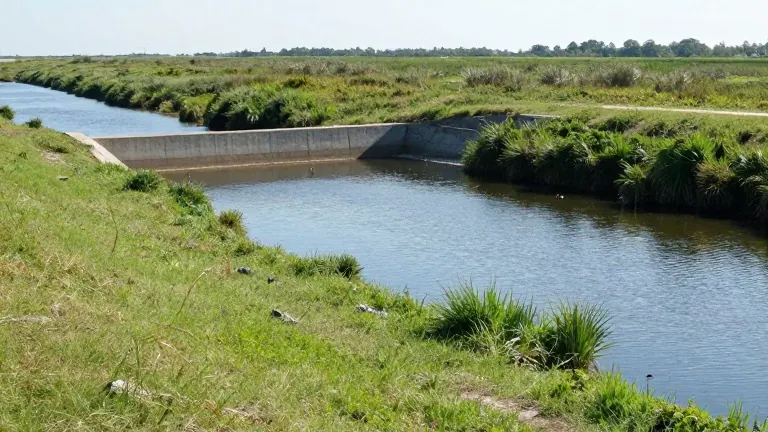
Federal officials are weighing a plan to move 2.8 miles of border wall construction from a private irrigation levee into the Santa Ana National Wildlife Refuge. Assistant U.S. Attorney Lance Duke announced this potential shift during a federal court hearing on Oct. 14. The move is a direct response to a legal dispute over trespassing on property owned by Hidalgo County Irrigation District No. 2.
The irrigation district alleges that government contractors entered its land without permission to begin wall construction. The district owns 60 feet of land on either side of an irrigation canal. Anthony Stambaugh, the district's general manager, testified in August that the contractors did not ask for entry. Stambaugh stated that a wall on the district's property would restrict space around the canal. He explained that this lack of space would make timely maintenance and repairs difficult for district crews.
Lance Kirby, the attorney representing the irrigation district, proposed an alternative alignment during the hearing. Kirby told the judge that building the wall 15 to 20 feet south of the current path would resolve the issue. He described the federal government's consideration of this move as exactly what his client had requested. The proposed new alignment places the wall directly through the 2,000-acre Santa Ana National Wildlife Refuge, a site located along the Rio Grande south of Alamo.
U.S. Customs and Border Protection, or CBP, moved forward with plans in July to build the wall on the adjacent levee. The agency did not confirm it is actively relocating the project through the refuge but stated it is aware of the lawsuit. A CBP spokesperson said the agency remains committed to enhancing border security at the site. The spokesperson noted that CBP is coordinating with the U.S. Fish and Wildlife Service and other federal and state partners. The agency expressed confidence in its legal authorities and assessments regarding the construction.
The legal battle began when the irrigation district filed suit against Spencer Construction LLC and Royal Concrete Products LLC in September. The district sought a restraining order to halt construction. A state district court in Hidalgo County issued a temporary restraining order on July 30. A federal judge later extended that order after the U.S. government removed the case to federal court. The temporary restraining order remains in place as of the Oct. 14 hearing.
Duke argued during the Oct. 14 proceedings that Texas trespass law might not stop the federal government from building on land it does not own. He stated that a wall at the proposed location was inevitable if necessary, even if the government had to use condemnation powers. Duke acknowledged that moving the wall through the refuge might create additional litigation from other interested parties. He described the government as looking into the irrigation district's suggestion to change the wall's path.
The Santa Ana National Wildlife Refuge has been a target for border security projects since 2017. Congress passed a law in 2019 that prevented appropriated funds from being used for wall construction in the refuge. During the current administration, CBP has used funding from the One Big, Beautiful Bill to bypass those appropriations restrictions. This funding mechanism allows the agency to proceed with construction despite earlier congressional protections.
U.S. Rep. Henry Cuellar, a Democrat from Laredo, voiced concern about the potential rerouting. Cuellar was part of the group of lawmakers who secured the 2019 protections for the refuge. He added language to the Homeland Security Appropriations bill for fiscal year 2027 to preserve those protections. Congress is not expected to vote on that bill until the end of the year. Cuellar called for transparency from the Department of Homeland Security and CBP regarding funding sources and environmental impacts. He stated that the government should consider investing in personnel, technology, and infrastructure as alternatives to building through a wildlife refuge.
Source: San Antonio Current · original report published
More News · San Antonio news · Report a business · Got a Story?