Birmingham Hosts 79th National Veterans Day Parade, A 1947 Tradition
The event, credited to local veteran Raymond Weeks, predates the federal holiday by seven years and remains the oldest such celebration in the United States.
By Ariana Flores ·
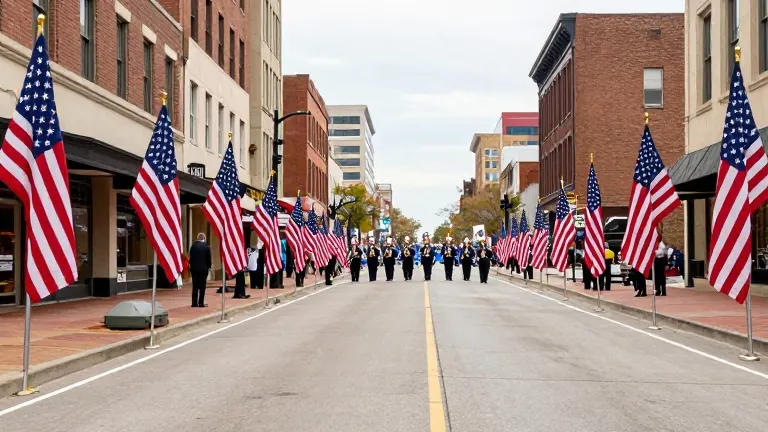
Downtown Birmingham hosted the 79th annual National Veterans Day Parade on Tuesday, drawing hundreds of attendees to a tradition that predated the federal holiday. The event marks a local initiative that eventually shaped national policy, creating a timeline where the community celebration outlasted the government's initial recognition.
The parade traces its origins to 1947, when Birmingham hosted the first Veterans Day activities. These included a World Peace Banquet and a march organized by Raymond Weeks, a World War II veteran from Alabama. Weeks believed the existing Armistice Day, established by President Woodrow Wilson in 1919 to mark the end of World War I, was too narrow. He sought to expand the commemoration to include all military service members.
In 1946, Weeks led a delegation to Washington, D.C., to persuade Army Chief of Staff General Dwight Eisenhower to create a broader national holiday. The first Birmingham parade followed in 1947. President Eisenhower signed legislation in 1954, officially establishing November 11 as Veterans Day. This legislative action formalized the concept Weeks had championed nearly a decade earlier.
President Ronald Reagan awarded Weeks the Presidential Citizens Medal in 1982. The citation described him as the "driving force" behind the holiday and the "Father of Veterans Day." Weeks led the annual parade until his death in 1985. The tradition has continued in Birmingham for 79 years, maintaining a direct link to the 1947 event.
The current parade serves as both a local gathering and a historical marker. It honors the men and women who served in the U.S. military while preserving the specific narrative of its Alabama origins. The event stands as the oldest of its kind in the nation, a distinction derived from the 1947 start date rather than the 1954 federal law.