Algerian Lawmakers Authorize Troop Mission to Guard Sonatrach Assets in Niger
The deployment, approved Sunday by both chambers of parliament, marks a departure from Algiers' longstanding policy of avoiding foreign military intervention.
By Ariana Flores ·
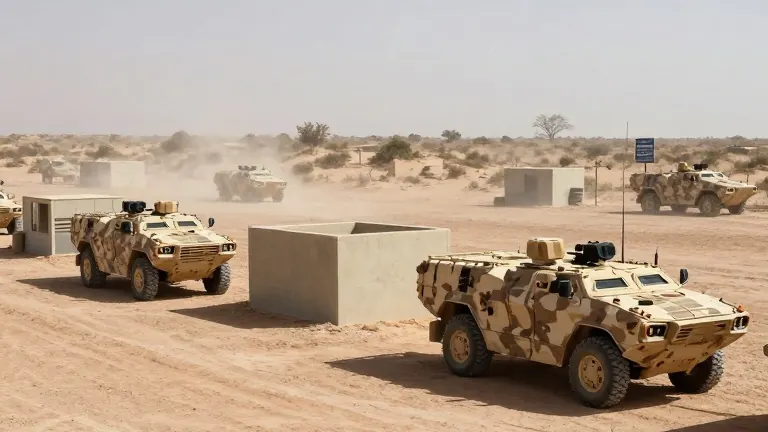
Algeria's lower house of parliament, the People's National Assembly, voted on Sunday to authorize the deployment of troops into neighboring Niger. The decision followed a unanimous approval from the upper house, the Council of the Nation, earlier that same day.
The mission is intended to protect oil installations belonging to Sonatrach, Algeria's state-owned energy company. Algerian Senator Belkacem Boulghiti told reporters after the vote, "We are not sending our soldiers to wage war in Niger, but for a mission to secure economic infrastructure." Boulghiti added, "It is simply an adaptation of our doctrine to evolving circumstances so we can rise to the new challenges imposed by the situation in the Sahel region." Details regarding the number of troops or a specific timeline for their arrival have not been released.
The vote follows the 2020 constitutional revision that established specific conditions for sending troops abroad. Article 91 of that constitution requires the president to obtain approval from at least two-thirds of the members in each house of parliament before authorizing such a deployment. This procedure was used for the first time to authorize the mission in Niger. According to the Stockholm International Peace Research Institute, Algeria spent more than $25 billion on its armed forces in 2025, making it the largest military spender on the African continent.
Relations between Algiers and Niamey have improved following a period of tension. Ties had deteriorated after Algeria condemned the 2023 coup in Niger and after the Algerian army shot down a Malian drone in April of the previous year, which led Niger, Mali, and Burkina Faso to recall their ambassadors from Algiers. Diplomatic engagement resumed when Niger's President Abdourahamane Tchiani visited Algeria in February, and Niger's defence minister, Salifou Mody, traveled to Algiers months later to discuss security cooperation.
The security environment in the Sahel has changed significantly since 2012, a year that saw a rebellion in northern Mali and a military coup. Since then, Mali, Burkina Faso, and Niger have recorded six military coups combined: three in Mali, two in Burkina Faso, and one in Niger.
Foreign military presence in the region has also shifted. France withdrew its troops from Mali in August 2022, Burkina Faso in February 2023, and Niger in December 2023. The United States withdrew approximately 1,000 soldiers from Niger in 2024 following the termination of their security cooperation agreement. In April 2024, approximately 100 Russian military personnel associated with Africa Corps arrived in Niamey to provide training to Nigerien forces.
Algeria has previously sent military assets into Niger. Nearly two months ago, Algerian authorities dispatched four Russian-made Sukhoi Su-30 jets, a transport aircraft, and an aerial refuelling aircraft to Niamey following what they described as an attempt to destabilize Niger's military-led government. In September, Algeria severed diplomatic relations with the United Arab Emirates, accusing Abu Dhabi of hostile actions without providing specific details.
The Sahel region, which stretches from the Atlantic Ocean to the Red Sea, includes territory along Algeria's southern frontier. The current security crisis in the area traces back to the 2011 collapse of Muammar Gaddafi's government in Libya, which resulted in weapons and armed fighters spreading into neighboring countries, contributing to the 2012 rebellion in northern Mali.
Source: Al Jazeera