Pope Leo's Encyclical Sparks Debate on Just War at Military Conference
At the first Catholic Military Conference, leaders discussed how a new papal document challenges centuries of doctrine regarding armed conflict.
By Yara Nasser ·
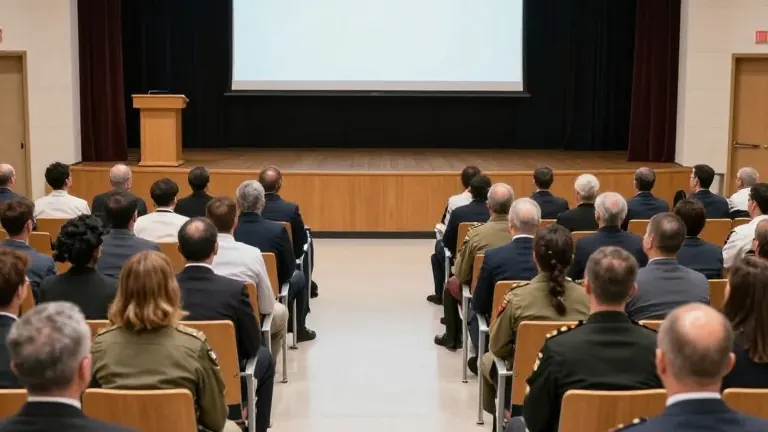
Archbishop Timothy P. Broglio faced a logistical puzzle on Nov. 9 when he convened 280 attendees from all branches of the armed services for the inaugural Catholic Military Conference. The archdiocese he leads has no geographical borders, serving an estimated 1.8 million Catholics stationed at U.S. bases worldwide. The three-day event in November was the result of only four months of planning, a timeline Broglio described as less painful than expected.
The central focus of the second day was Magnifica Humanitas, the first encyclical from Pope Leo XIV, released in May. The document addresses the digital revolution and argues that traditional frameworks for just war are now outdated. The pope wrote that humanity possesses more effective tools for resolving conflicts, such as dialogue and diplomacy, while noting that the use of force reflects a relational poverty with disastrous consequences for civilians.
Matthew Bunson, vice president and editorial director of EWTN News, stated that the encyclical opens a new chapter in Catholic moral reflection. He argued that the traditional foundation of just war theory has become inadequate, urging the church to think beyond inherited assumptions. Bunson noted that Pope Leo is a realist without being a pragmatist, countering claims that the document is merely a utopian dream.
Joe Capizzi, director of the McGrath Institute for Church Life at the University of Notre Dame, observed that both Pope Francis and Pope Leo maintain a skeptical view of war. Capizzi emphasized that all participants in conflict are invited to morally evaluate their actions, asserting that vengeance is not a good political end and that wars must be justice-seeking.
Retired Army general and author James Dubik described war as the abnormal that becomes the normal. He stated that the coin of war is life itself, which only God gives. Dubik argued that because war damages lives and changes living, sometimes forever, it should only be fought sparingly.
Beyond the theological debates, the conference addressed practical challenges for military clergy. Broglio noted a perpetual shortage of priests, with fewer than 500 available and fewer than 250 serving as active-duty chaplains. He recently hosted 33 prospective chaplains for a discernment retreat in Baltimore. Broglio said that attracting priests to this role requires a specific physical condition and the ability to serve far from home, which he called a call within a call.
Broglio added that chaplains from other denominations often approach him during base visits to thank the Catholic Church for speaking on their behalf. He said he is told that they do not have anyone speaking for them, so they turn to Catholic statements. The conference will likely be held every two years rather than annually, according to Broglio.