Mississippi Elects First Black Senator Since 1870s
Scott Colom defeats Cindy Hyde-Smith in a historic upset, ending decades of Republican dominance in the state.
By James Foster ·
Mississippi has not sent a Democrat to the US Senate since 1947. On Wednesday, Scott Colom broke that streak by defeating incumbent Republican Cindy Hyde-Smith in a narrow victory. The win makes Colom the state’s first Black senator since the post-Civil War Reconstruction era.
The Associated Press called the race after local officials spent several days processing affidavit ballots. These provisional votes took time to count, extending the wait for a final result. The outcome marks a sharp shift for a state that has been governed by white conservatives for generations.
Colom is 43 and serves as a local prosecutor. He campaigned on economic discontent and Hyde-Smith’s missteps during her tenure. The race drew national attention only after Black senators Raphael Warnock and Angela Alsobrooks urged donors to fund the campaign months before the election. Washington had previously viewed the contest as a long shot.
Hyde-Smith, 67, conceded via a late Wednesday afternoon phone call. She released a statement online shortly after, saying she respected the decision of Mississippi voters. “I want to congratulate Scott Colom and wish him well as he takes on the tremendous responsibility of representing our great state,” she said.
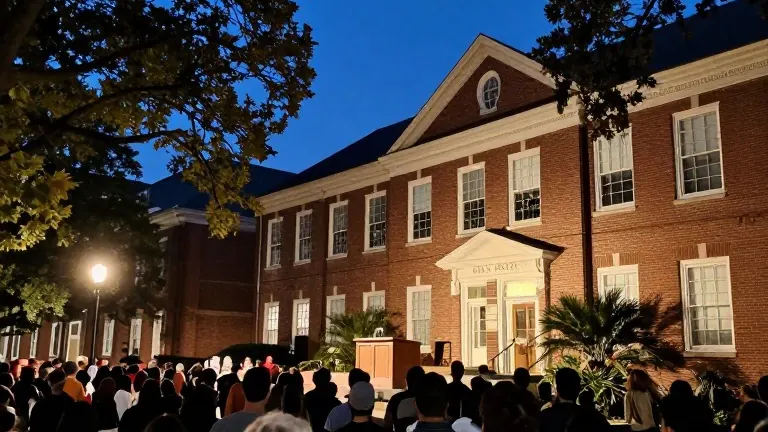
Colom addressed hundreds of supporters at Tougaloo College in Jackson. He spoke about the courage required to imagine such a night. “I had the courage to believe in Mississippi. I had the courage to understand that we can show the country that Mississippi matters,” Colom told the crowd.
The victory adds to a midterm rebuke of President Donald Trump. Republicans suffered defeats in several states, including North Carolina, South Carolina, Georgia, and Texas. Party leaders hailed the win as evidence that Democrats can compete in the American South.
Senate leader Chuck Schumer posted online that Colom re-imagined what is possible for Democrats in the region. Former President Bill Clinton, a native Arkansan who campaigned with Colom, said on social media that the senator-elect won because he believed in the promise of the state’s people.
NAACP President Derrick Johnson issued a statement noting that voters, particularly Black voters, refused to be intimidated. He cited the state’s history of difficult battles for voting rights. Vera Finley, a supporter whose parents picked cotton, said she was excited to be on the right side of history.
Colom’s strategy focused on criticizing Hyde-Smith rather than attacking Trump directly. He highlighted the Iran war’s impact on gas prices and tariffs affecting farmers. Hyde-Smith had previously blocked Colom’s 2022 nomination to a US District Court judgeship, a fact Colom said was not central to his campaign.
Results showed strong turnout in the Mississippi Delta and majority-Black counties. Nearly all of the state moved leftward compared to the 2024 election, when Trump won by nearly 23 points. In 2023, Governor Tate Reeves won reelection by only 3 percentage points.
Colom concluded his speech by invoking Medgar Evers, a civil rights leader assassinated in 1963. He noted the irony that the race was called on Veterans Day, as Evers had served at Normandy. “He served his country, came home to Mississippi, and they wouldn’t let him vote,” Colom said.
Colom said his job is to perform well enough as senator to ensure the next Black candidate has a fair chance. He pledged to treat Mississippians’ children and parents with the same care he would give his own family. The next scheduled step is his official swearing-in, where he will join the Senate chamber.