Bright Fireballs Set to Light Up Nov. 4-5 Skies
The Southern Taurids peak overnight Nov. 4 into Nov. 5, with another viewing window the following night.
By James Foster ·
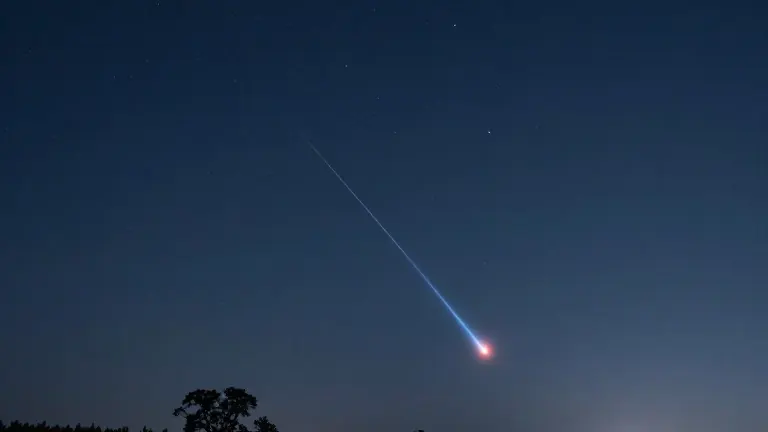
The Southern Taurid meteor shower reaches its peak overnight Wednesday, Nov. 4, into Thursday, Nov. 5, according to the American Meteor Society's calendar. The night after, Thursday into Friday, Nov. 6, also offers a viewing opportunity.
Observers should look around midnight and into the early morning hours, weather permitting. That timing lines up with Taurus, the constellation from which the meteors appear to originate, sitting high in the sky.
The draw is brightness rather than volume. Taurids can produce slow-moving, colorful fireballs that stand out against the dark. NASA explains the shower occurs as Earth passes through debris left by Comet Encke, material entering the atmosphere at roughly 65,000 mph before burning up.
Under ideal conditions, the Southern Taurids produce about five meteors per hour. Their northern counterpart can push the combined total to roughly 10, according to EarthSky's meteor shower guide. Those estimates assume dark skies, not a guaranteed count from a lit neighborhood. Moonlight should pose limited interference: the American Meteor Society lists a waning crescent moon roughly 25 percent illuminated that night. The Taurids also have broad peaks, so activity stretches across multiple weeks. NASA's linked article described an enhanced Taurid swarm in 2015, and EarthSky identifies 2032 as the next predicted exceptional fireball outburst.
For the best view, the American Meteor Society recommends finding a dark location away from streetlights and buildings with an open stretch of sky. No telescope or binoculars are needed.