Oregon ballots face multi-layered verification before counting
A look at the physical and digital steps taken to secure mail-in votes in Oregon, from dropbox collection to final tallying.
By David Marshall ·
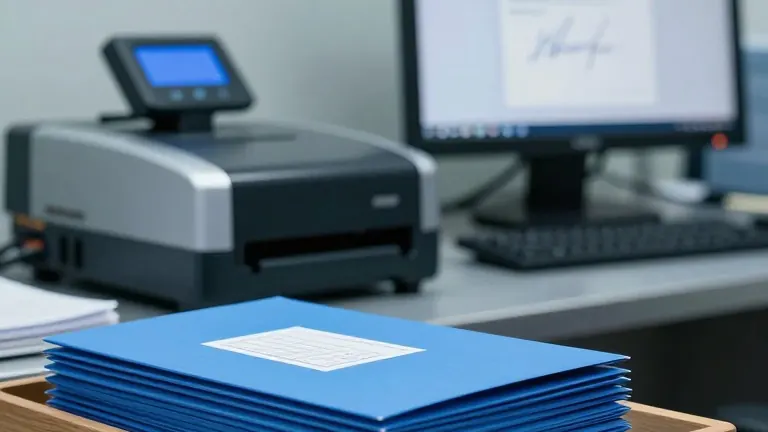
Election workers in Linn County, Oregon, currently sort trays of ballots in an office along the Willamette River waterfront. The process, which began in 2000 when the state became the first in the nation to run all elections by mail, involves strict physical and digital checks. More than 3.1 million voters receive ballots by post, with many using roughly 300 dropboxes statewide to return them.
The procedure started in 1981 when Linn County Clerk Del Riley proposed mailing real ballots to save on printing costs. A test run that fall saw turnout exceed 75%, a jump of nearly 20 percentage points over the previous primary. Marcie Richey, the current clerk, has overseen these elections since 1993. She noted that the mail system produces fewer errors than the previous in-person method, which required training inexperienced poll workers.
Once a ballot enters a dropbox, it is collected in a locked bag by workers who carry an affidavit proving their identity. These collections occur twice daily in most areas and once daily in rural zones. The dropboxes are chained in place and equipped with internal fire suppression systems. Upon arrival at the clerk's office, ballots are placed in trays, each paired with a yellow auditing form that tracks the count and notes any anomalies.
Staff then run the trays through a machine to count ballots and scan the signatures on the blue envelopes. Workers verify each signature against voter registration records on a monitor. If a signature does not match, the ballot goes to election officials for a second look. If rejected, the clerk mails a note to the voter requesting a new signature. Voters using the BallotTrax system also receive an alert in this scenario.
An extraction machine separates the ballots from the envelopes. Staff then hand count the envelopes and the ballots separately. Two employees write their counts silently and compare them only after finishing. This double-check ensures the batch totals are accurate before the ballots move to a holding room.
Tallying occurs on machines running Clear Ballot software, which is disconnected from the internet. The room housing these machines is also offline. After counting, ballots are stored in a vault. Oregon law requires clerks to keep ballots for 90 days after the contest period ends. A 2026 executive order from the Trump administration requests five-year storage for general elections, a rule currently under legal challenge with Oregon as a plaintiff.
Security measures include cameras in every ballot area, thick mesh glass windows, and motion sensors that notify Richey and local police if movement is detected after hours. Custodial staff are barred from ballot rooms until results are certified. Researchers at the Brookings Institution found about four fraud cases per 10 million mail ballots cast in recent elections. A 2020 state study recorded 38 criminal convictions out of 61 million ballots cast between 2000 and 2019.