Nasdaq Enters Correction Zone After 10% Drop From October Peak
Tech stocks fell nearly 4% Thursday, wiping out post-election gains as investors reassess the cost of artificial intelligence infrastructure.
By James Foster ·
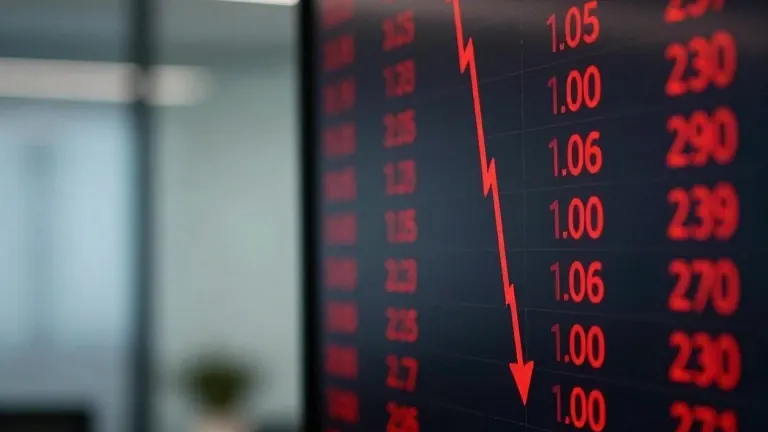
The Nasdaq Composite Index closed Thursday at 24,712.60, a drop of nearly 4% that pushed the benchmark more than 10% below its record closing high. This decline officially places the index in correction territory, a status defined by a fall of at least 10% from recent peak levels.
The index is now trading well below the 27,599.89 mark it reached on October 6. The recent slide erased the gains seen in the previous session, when markets had rallied following the midterm election results.
Investors reacted to the shift in congressional power. Democrats secured majority control of both the House of Representatives and the Senate. Sameer Samana, senior global market strategist at Wells Fargo Investment Institute, noted that moving from unified control under one party to another creates policy uncertainty. He stated, "When it looked like the Democrats were going to take significant majorities in both the House and the Senate, we thought that at the very least, it would lead to markets taking a little bit of a pause."
Concerns over the cost of artificial intelligence are driving the sell-off. The Nasdaq has lost more than $2.5 trillion in market value during October. Major technology firms are issuing debt to finance billions of dollars in planned investments for data centers, chips, and other AI infrastructure. Investors are increasingly skeptical about how quickly these expenditures will generate profits, especially while borrowing costs remain high due to persistent inflation and geopolitical tensions in the Middle East.
This marks the Nasdaq's second correction this year. Recent earnings reports from hyperscalers Alphabet and Meta failed to quell doubts about return on investment. The data suggested that the scale of AI spending is outpacing immediate revenue gains, leading to broader caution among traders holding AI-linked stocks.
The market now faces heightened scrutiny on how tech companies will fund their expansion. With Democrats holding both chambers of Congress, legislative attention on data center growth and infrastructure costs is expected to increase. This shift adds a layer of regulatory risk to the financial calculus for major tech firms.
More Business · Scam Watch · Report a business · Got a Story?