Copper wire swap causes national ground stop
Transportation officials said outdated infrastructure failed during a routine upgrade, halting flights for more than four hours on Friday.
By David Marshall ·
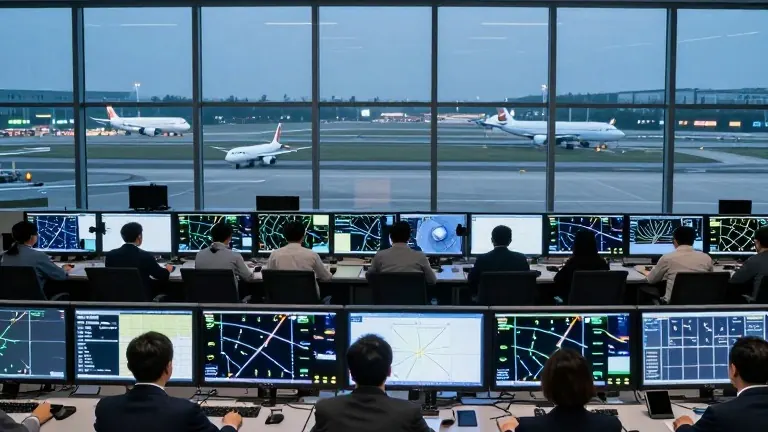
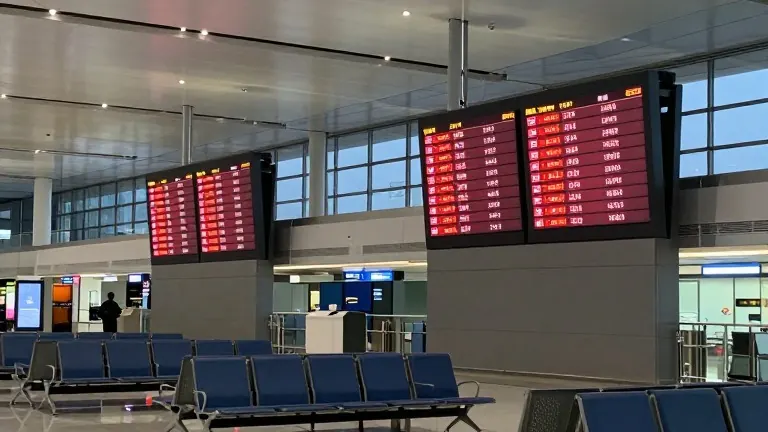
Nationwide air traffic was grounded for more than four hours on Friday due to a failure in the communication system that links regional control centers to aircraft. Transportation Secretary Sean Duffy announced Saturday that the disruption resulted from intermittent gaps in communication and radar feeds caused by overloaded equipment.
The issue emerged on Friday afternoon when a contractor replaced a section of discontinued copper wire with new fiber optic cable in a remote location. Duffy stated that the system processed over 1,000 connection attempts every four to five seconds during the upgrade. This surge in activity created instability in the network, which compromised the ability of controllers to maintain safe spacing with pilots. Officials described the event as a rolling outage, meaning the failure was unpredictable and moved from one control center to another across the country.
FAA Administrator Bryan Bedford reported that the frequency instability affected as many as 17 of the 22 regional air traffic control centers in the United States. These centers manage long-distance flights at altitudes above 10,000 feet. Because the failure occurred within the shared communication infrastructure rather than at a single airport, the impact rippled through the national airspace system. Andrew Charlton, an aviation consultant, noted that the knock-on effect is severe because aircraft do not simply fly point to point but continue into subsequent segments of their routes, amplifying delays on long-haul and international flights.
Flights in the air when the ground stop began were able to land using established procedures. Duffy emphasized that safety remained the primary concern during the shutdown. The government has been replacing old copper wires with fiber optic lines for years. Congress approved $12.5 billion for this technology overhaul last year, though Duffy urged lawmakers on Saturday to provide additional funding to complete the transition.
Experts pointed out that the system is moving toward a digital text-based messaging method known as controller pilot data link. This system would allow routine clearances to be exchanged via data rather than voice radio. Until that transition is complete, reliance on the physical telecommunications network remains critical. Michael McCormick, a former FAA airspace manager and professor at Embry-Riddle Aeronautical University, warned that the unpredictability of the rolling outage made it particularly difficult to manage. He noted that the system connects remote transmitter sites to the main control centers, ensuring two-way communication for safe aircraft spacing.
Backup systems allowed pilots to maintain contact even during the disruption. John Hansman, an aeronautics professor at MIT, explained that aircraft have satellite phone systems and onboard equipment that identifies nearby planes. Control towers can also use high-intensity light beams to signal pilots if radio communication fails. The FAA lifted the grounding order late Friday, but airlines with diverted flights may take days to return to normal schedules.
More News · San Antonio news · Report a business · Got a Story?