Turkish Presidential Son Visits Lebanon to Strengthen Regional Ties
Bilal Erdogan’s three-day tour of Lebanon highlights Turkey’s strategy to deepen its political and economic ties in the region following the fall of the Assad regime.
By News Media House Staff ·
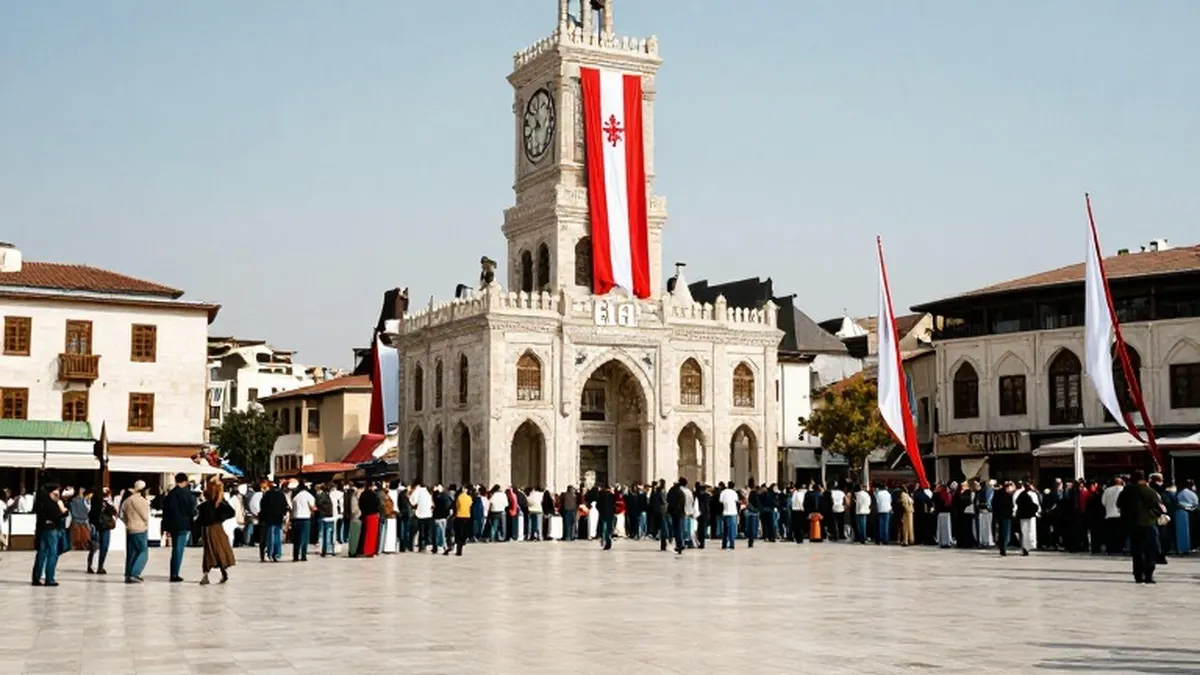
Bilal Erdogan, the son of Turkish President Recep Tayyip Erdogan, recently completed a three-day tour of northern Lebanon that was marked by enthusiastic public receptions and high-level political meetings. The itinerary included stops in Beirut, Tripoli, and Akkar, regions where Turkey maintains deep historical, cultural, and religious links. This visit serves as a clear indicator of Ankara’s strategy to expand its influence in Lebanon, a move that gains particular relevance following the recent change in leadership in neighboring Syria.
While Turkey has long maintained a presence in Syria and northern Iraq, its recent focus on Lebanon signals a broader foreign policy ambition. Ankara is also active in Libya, Somalia, and the Eastern Mediterranean. The timing of the visit coincides with increasing tensions between Turkey and Israel, raising questions about how a stronger Turkish role might reshape the regional balance of power.
The reception in Tripoli, Lebanon’s second-largest city, drew significant media attention. Al-Akhbar, a newspaper often associated with Hezbollah, described the welcome as exceptional. The publication noted that the warm reception was not just a nod to historical social ties but also carried substantial political and economic weight. This enthusiasm stood in sharp contrast to the more subdued welcome given to Lebanese President Joseph Aoun during his own visit to the city two weeks prior.
Tripoli possesses a large Sunni population and retains significant architectural remnants from the Ottoman era. As Hezbollah dominates the south and Saudi Arabia’s political role in Lebanon has diminished, many Sunnis have felt a lack of a strong regional patron. Bilal Erdogan’s itinerary included symbolic Ottoman sites such as the Hamidiyeh Clock Tower, the Great Mansouri Mosque, and the old markets. The clock tower, built under Sultan Abdul Hamid II, was decorated with both Lebanese and Turkish flags for the occasion.
The visit also included meetings with diverse political and religious figures, suggesting that Turkey’s outreach extends beyond its traditional Sunni partners. In Beirut, Erdogan met with Parliament Speaker Nabih Berri, Druze leader Walid Jumblatt, and Bahia Hariri, vice president of the Future Movement. These leaders represent distinct communal constituencies, including the Shiite Amal Movement, the Druze establishment, and the Sunni legacy of the Hariri family.
During the trip, Erdogan addressed young people in Arabic and conveyed greetings from his father, a gesture highlighted by Turkish media to emphasize friendship and cultural connection. He also visited al-Kawashra, a town with Turkmen roots and longstanding ties to Turkey. This location holds historical significance as the site of a 2010 visit by President Erdogan alongside then-Prime Minister Saad Hariri.
The political meetings in Beirut were described as discussions on bilateral relations and regional developments. Jumblatt specifically praised Turkey’s role in encouraging regional dialogue and stability. The presence of the Yunus Emre Institute, which promotes Turkish language and culture, in the delegation further underscored the cultural dimension of Ankara’s engagement.
A central theme of the visit was the strategic importance of Syria. Erdogan noted that recent developments in Syria had finally allowed him to visit Tripoli after previous obstacles. He proposed expanding trade and investment and reviving land and rail connections between Lebanon and Turkey via Syria. Such initiatives would require substantial infrastructure investment and security stability in Syria, but they highlight Turkey’s aim to convert political relationships into economic influence.
Although Bilal Erdogan does not hold the formal title of foreign minister, his visit carries weight due to his position within Turkey’s political and cultural establishment. The trip demonstrates a multi-channel approach to diplomacy, combining Ottoman heritage, cultural initiatives, and cross-sectarian political engagement. As Lebanon navigates its own economic and political challenges, Turkey appears poised to become a more visible participant in the country’s evolving regional relationships.
Originally published by News Media House