Alaska Elects Jonathan Kreiss-Tomkins as Governor in Midterm Sweep
The former state lawmaker defeated three Republicans to end 28 years of Republican and independent control in the governor's mansion.
By Yara Nasser ·
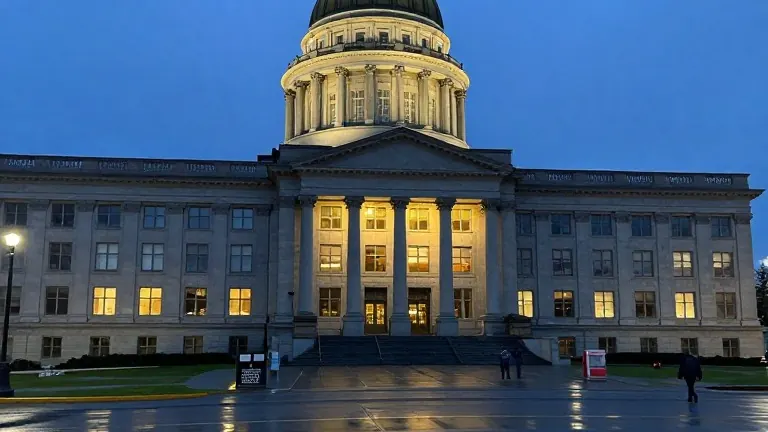
Alaska voters elected Jonathan Kreiss-Tomkins as governor on Friday, marking the first time a Democrat has held the top state office since 1998. The 37-year-old former state lawmaker secured a victory in a competitive general election, joining a national wave of Democratic gains in statehouses across the country. With this win, Democrats will now control the governor's office in 30 states.
Kreiss-Tomkins defeated three Republican opponents in the race. The field included Bernadette Wilson, a business owner endorsed by President Donald Trump, Dave Bronson, the former mayor of Anchorage, and Treg Taylor, who served as state attorney general under the outgoing administration. Trump had publicly criticized the other Republican candidates for remaining in the race, a move that many Republicans saw as a strategic risk to their party's chances of retaining the seat.
The candidate focused his campaign on affordability and fiscal responsibility. He advocated for full funding of public schools and proposed requiring all oil and gas producers to pay corporate income tax. Kreiss-Tomkins also called for a temporary pause on new data centers until state lawmakers established regulations for their development. He argued that the state had become broken under eight years of Republican leadership, citing a deteriorating ferry system that serves roadless communities in southeast Alaska.
Kreiss-Tomkins emphasized a willingness to govern across party lines. He stated his intent to form a cabinet that includes Republicans, Democrats, and independents. During a recent forum, he said, “If they’re competent, if they’re service-minded, if they’re entrepreneurial, if they’re problem-solvers, you’re on the team. Game on.” He described compromise as a virtue rather than a weakness, aiming to work with lawmakers to resolve longstanding state issues.
The race drew support from several high-profile figures. Republican U.S. Senator Lisa Murkowski endorsed Kreiss-Tomkins one week before the election. She noted that he understands the need to listen to different perspectives to solve shared problems. Three former governors also backed his candidacy: Democrat Tony Knowles, independent Bill Walker, and Republican Frank Murkowski, the senator's father.
In a statement declaring victory earlier Friday, Kreiss-Tomkins said voters wanted a government that works across party lines. He noted his campaign had secured more than 10,000 donors and pledged to start solving problems immediately. His campaign did not immediately respond to requests for comment after the Associated Press called the race. Bronson congratulated the winner on social media, while Wilson's campaign had not yet returned messages seeking comment.
Kreiss-Tomkins will be sworn into office on December 7. He will be joined by Zac Johnson, an independent, who won the lieutenant governor position. The last Democrat to hold the governorship was Tony Knowles, who left office in 2002 after two terms. Bill Walker, an independent, served from 2014 to 2018.
The election concluded a process that began with an open primary in August. Kreiss-Tomkins finished first in that contest, followed by Democrat Tom Begich, who later withdrew to unite the party's resources. Wilson finished third in the primary. The final result stands as a major shift in Alaska's political balance, aligning the state with other regions where Democrats have reclaimed executive power.
More Politics · San Antonio news · Report a business · Got a Story?